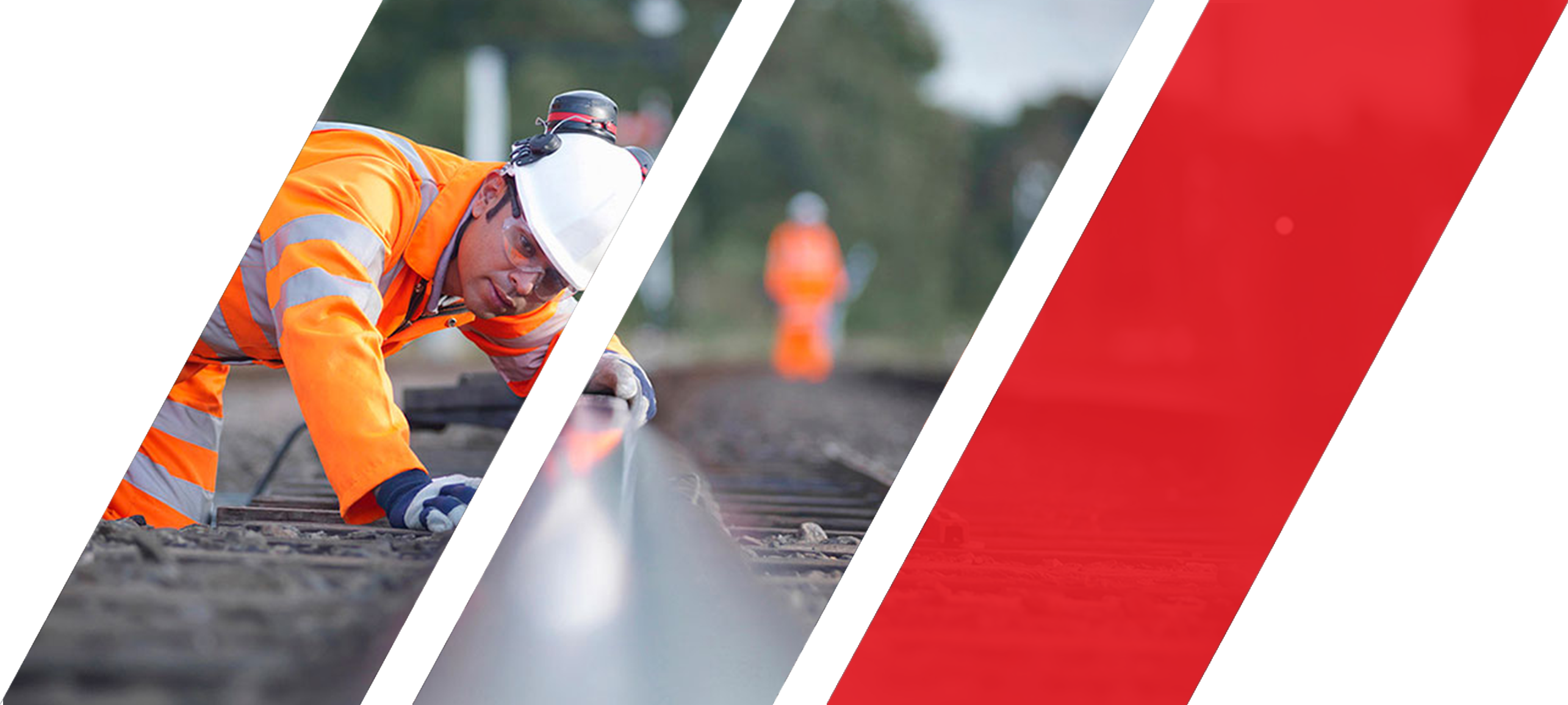
Safe, Secure and Getting Safer

Canada's railways run an average of 1,100 passenger and goods trains every day, often over some of the world's most rugged terrain and in some of the world's worst weather conditions. Canada's railways have the best safety record in North America and provide by far the safest means of ground transportation in Canada.

Safety Regulation
Rail safety is highly regulated in Canada. Transport Canada (TC) has regulatory oversight over the sector via various legislation and acts, rules and regulations etc. TC has stringent rules dictating track inspection, track maintenance, equipment inspection and maintenance that are rigorously applied and enforced. All incidents are reported to and investigated by the Transportation Safety Board of Canada.

Amendments to the Railway Safety Act in 1999 required railways to implement Safety Management Systems (SMS) to integrate safety into day-to-day operations. SMS did not replace or lessen any existing safety rules or regulations, nor did it lessen the oversight capabilities of Transport Canada in any way. In fact, SMS represented an additional layer of regulation on top of existing requirements. SMS moved all parties away from a program basis where the number of regulatory interventions is the key measure, toward a risk management culture where the key measurements are based on safety performance results.

SMS added new requirements for railways to:
- Ensure that they have safety targets and report results to Transport Canada;
- Develop processes to ensure employees are aware of regulations;
- Maintain policies beyond minimum requirements;
- Measure, monitor, and track hazards and defects;
- Solicit employee input, and
- Mitigate hazards to reduce or eliminate risks.

Rail Safety
The performance of Canadian railways in terms of safety has steadily increased over the last decade. While the sector moved a record 473.3 billion gross ton-miles (BGTM), it maintained a rate of 2.41 total accidents per BGTM, the lowest rate in the last 10 years. The data collected in order to analyze the safety performance of rail comes from the Canadian Transportation Safety Board (TSB) and the RAC. The TSB maintains a database of safety performance statistics on federally-regulated railways and the RAC collects similar statistics on provincially-regulated operations. The database is available at http://www.tsb.gc.ca/eng/rail/index.asp

Rail Crossings and Trespassing Accidents
Through RAC, Rail companies in Canada are engaged in an active and highly successful public information and education campaigns to reduce the number of crossing and trespassing incidents. Innovative initiatives, such as Operation Lifesaver, are having a direct and positive impact.

Since 1980 the number of crossing collisions (where a train and motor vehicle collide) in Canada has fallen dramaticall. While this reduction speaks to the success of safety efforts undertaken in that time, there still remains unnecessary loss of life and injury. In 2011 accidents at railway crossings were down 6.6 per cent year-over-year, while serious injuries fell 25 per cent over the same period. Trespasser accidents and fatalities dropped 17.3 and 18.2 per cent year-over-year, respectively.


Media Contact:
Mr. Paul Goyette
Director, Communications and Public Affairs
Telephone: (613) 564-8097
PaulG@railcan.ca


©2013 The Railway Association of Canada. All rights reserved.

Rail 2030

There is growing interest to develop a document that positions the freight and passenger rail industry 20 years into the future. The project is entitled Rail 2030. The intent of this initiative is to investigate possible future scenario frameworks and develop recommendations, in partnership with government and other stakeholders, on issues common to all, which will benefit the Canadian economy... MORE >